Why is wagyu so expensive? Singapore chefs and restaurateurs explain
Advertisement
Experiences
Why is wagyu so expensive? Singapore chefs and restaurateurs explain
Among the key factors determining wagyu prices are the cattle's pedigree, its geographic origins, the farmer'south raising techniques, and market demand.
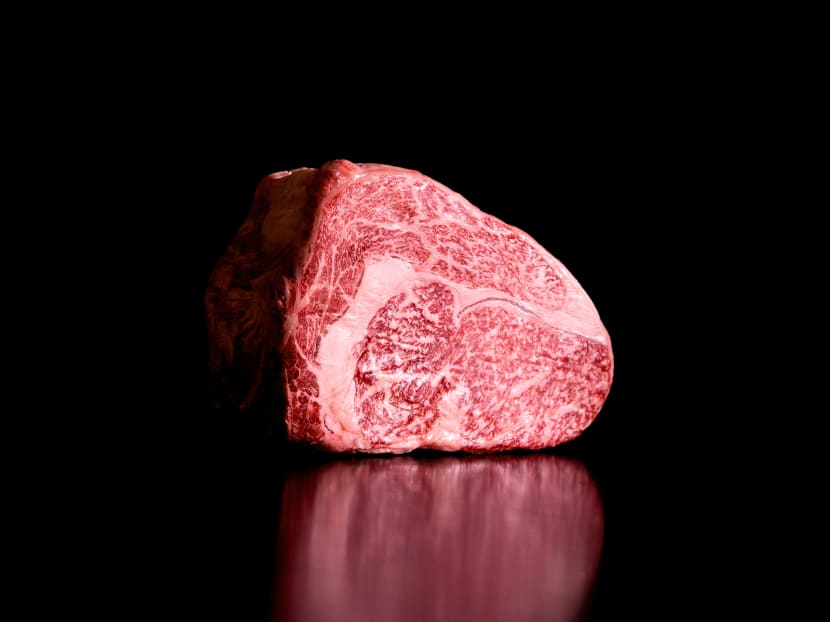
A truthful appreciation of the varied qualities of the best Japanese wagyu requires an every bit not bad agreement of its rather complex offering – from the official breeds and brands to their unique breeding programmes, diets and grading system. (Photo: iStock)
twenty Sep 2022 06:27AM (Updated: xx Sep 2022 06:48AM)
Despite its recent introduction in the early 1900s (following the Meiji Restoration), wagyu has rapidly evolved from a prohibited poly peptide to a globally coveted luxury nutrient item – famed for its quality beef and exceptionally intense marbling that are the result of precision creature husbandry.
And while there are essentially four breeds of "wa-gyu" (which roughly translates to hateful Japanese cow) – namely the Japanese black, dark-brown, poll and shorthorn – a number of prefectural standouts take since earned serious recognition, the most internationally renowned being Kobe beefiness, derived from the Tajima-gyu from Hyogo Prefecture. Information technology is likewise said to be one of the hardest to procure outside of Nihon; a blackness cow (kuroge) breed that is produced in notoriously modest numbers.
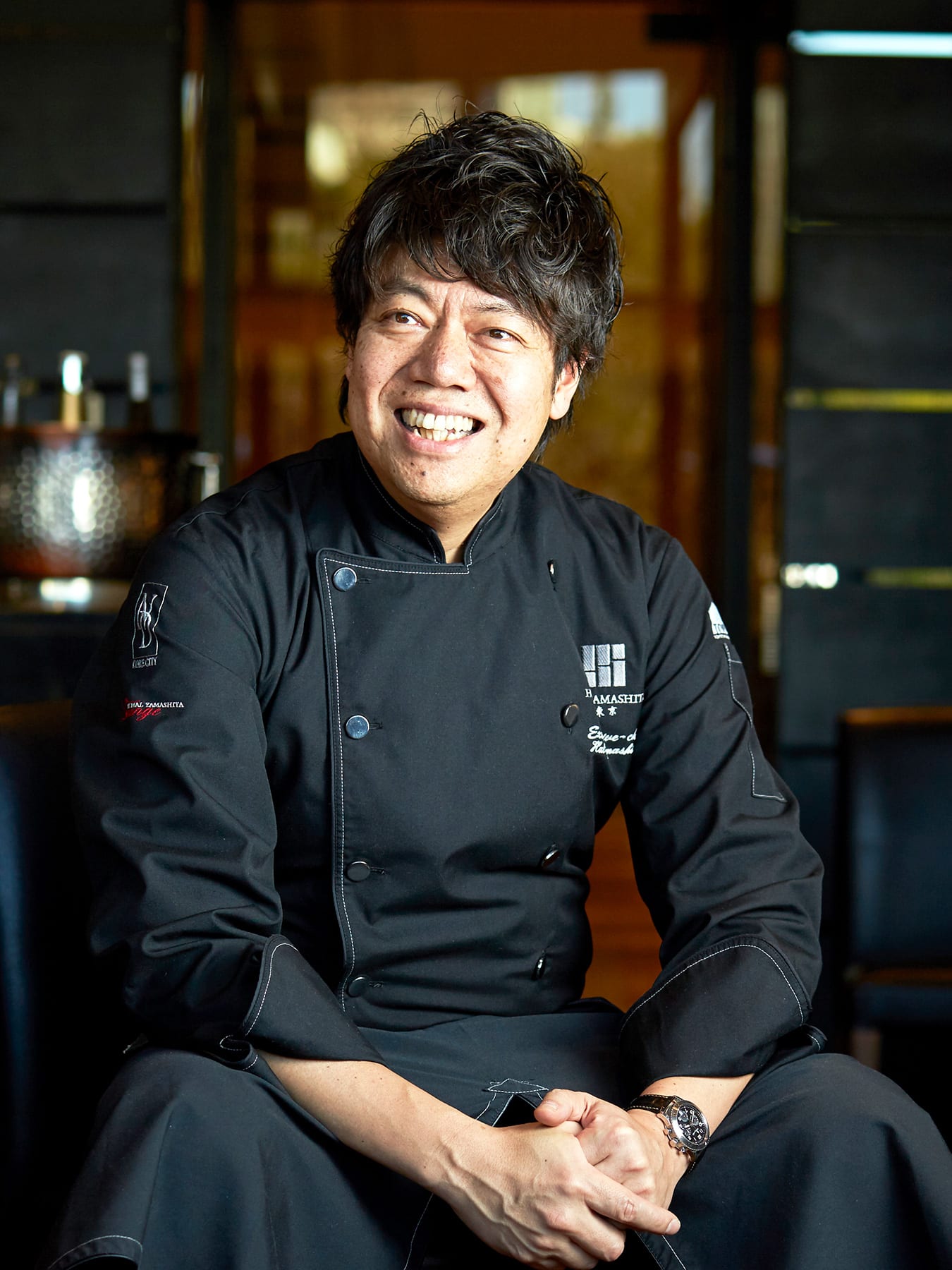
Hyogo is where the Tajima cattle originates, shares Haruyuki Yamashita, executive chef and possessor of Hal Yamashita Tokyo, and Syun at Resorts Earth Sentosa, Singapore. He is also an counselor with both the Japan Association for the World Nutrient Program, equally well as Hyogo Food (nether the Hyogo Prefectural Government).
He explained: "Kobe-gyu has to articulate strictly set standards and only (a small) percentage can be certified as Kobe-gyu; non all wagyu produced in Kobe tin be sold as Kobe-gyu."
In fact, according to the Japan National Tourism System, the country's top iii brands – Kobe, Matsusaka and Ohmi – all hail from the region of Kansai. Only as Yamashita asserts, not all wagyu are created equal. To wit, he notes that as the popularity of height wagyu is still on the rise in key markets similar China, Kobe beef has since been dubbed "maboroshi no niku" or "dream meat".
The differences are predominantly tied to the geographic origins, like how Hyogo is "blessed with climate, weather and water conditions perfect for convenance cattle". And the local authorities are extremely committed to ensuring the quality and actuality of the few thousand heads of cattle a year that are certified Kobe beef.
Every bit it is, the pedigree of every cutting of Tajima beef can be traced via a 10-digit identification number. But simply cattle that meet extremely specific grades of quality, including a marbling index of at least half dozen, can be certified every bit Kobe beefiness. This is consequently reflected in the price it fetches, which tin can be as high as x one thousand thousand yen (S$122,000) for a unmarried beast, said Yamashita.
He added: "At that place accept been cases where due to its popularity, the price is inflated through the distribution concatenation, (resulting) in prices being too high. Only in my opinion, at the point of auction, it is worth the cost."
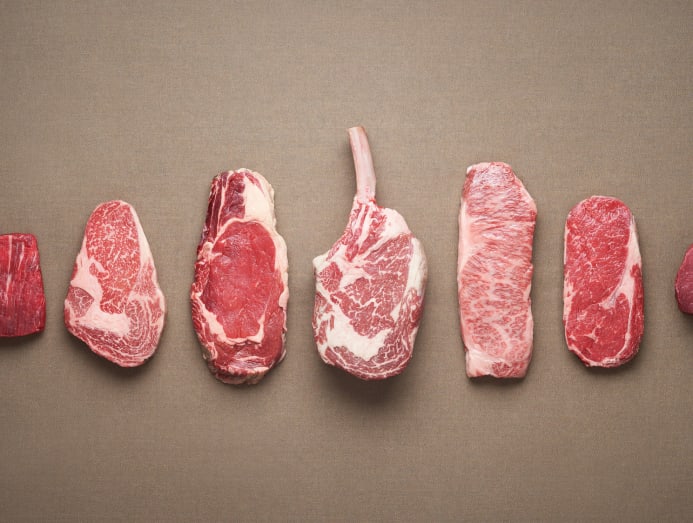
Each cut, he explains, has its merits, making it is difficult for him to say which he prefers the near. Regardless, Yamashita does prefer searing the beef on a suitably sized teppan (fe cask) to describe out the sweetness of the wet and fat. "In recent years, I accept too added charcoal grill as one of my [preferred] methods," he shared.
MATURE Gustation
A true appreciation of the varied qualities of the best Japanese wagyu requires an equally swell understanding of its rather complex offering – from the official breeds and brands to their unique breeding programmes, diets and grading system.
But it'due south besides worth noting that top producers such every bit Ohmi (which uses Japanese black cattle grown in Shiga Prefecture) could too purchase calves at an sale from notable sources similar Miyazaki, shares Hirohashi Nobuaki, chef-owner of restaurant Ushidoki Wagyu Kaiseki.
These, he explains, are raised until a certain age, generally effectually 26 to 28 months, and only then certified nether the prefecture and make they have been raised.
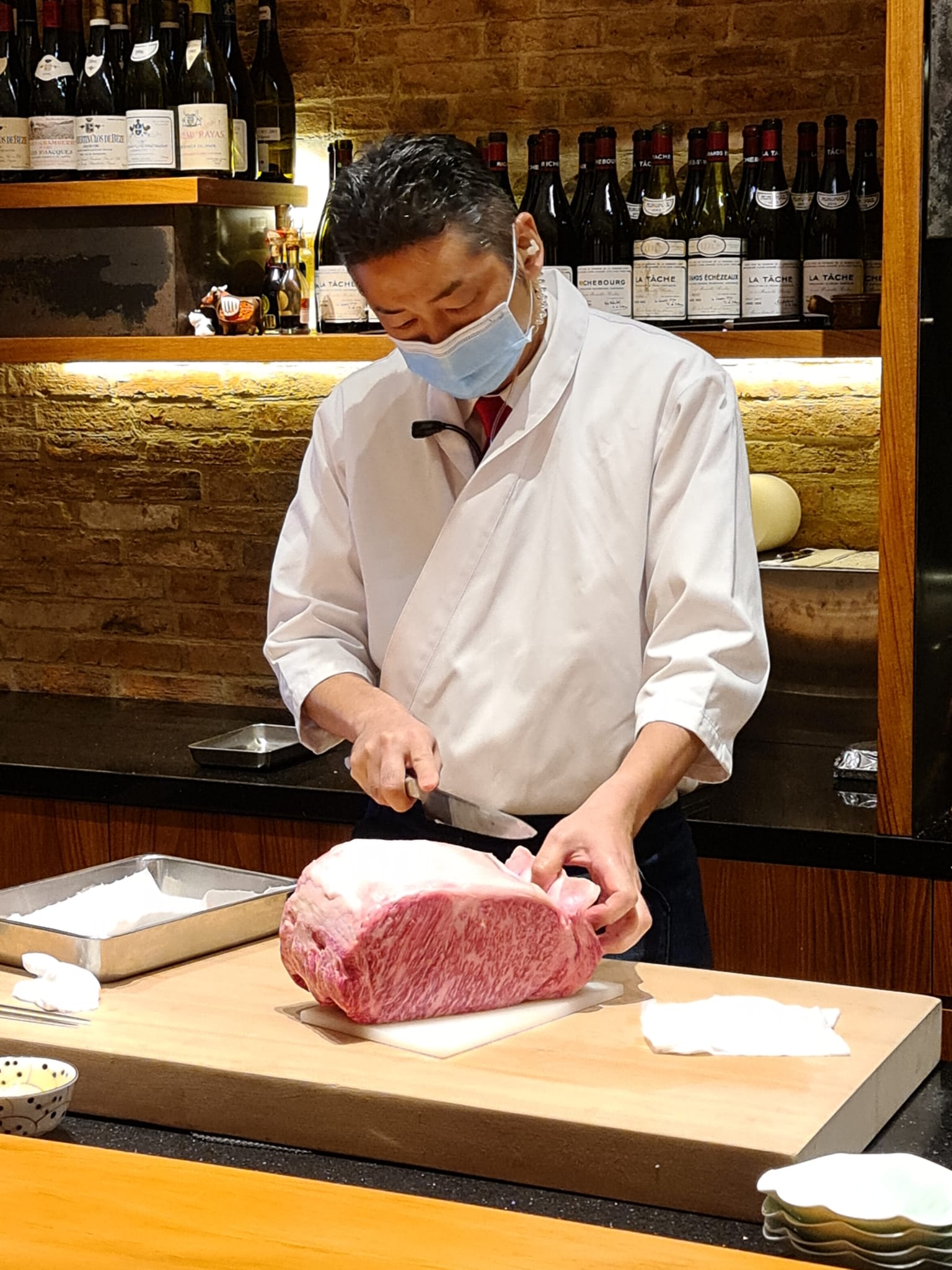
This is a common practice, just i farmer has chosen another fashion to stand out in a crowd of standouts. Raised on his subcontract in Miyazaki, Muneharu Ozaki'south wagyu are not sent to the local agricultural governing trunk to be graded alongside other wagyu from the area, Nobuaki affirms. Instead, they are branded and marketed under the farmer's own proper name.
The main reason has to practice with the age at which Ozaki'due south cows are slaughtered. While virtually wagyu cattle in Japan are slaughtered at around 28 months, Ozaki believes that their flavour continues to improve with age. Every bit such, he continues to feed and care for them up until most 34 months earlier they are slaughtered.
To boot, he claims that the melting signal of the fats in these matured cows are lower than other wagyu.
Naturally, the high cost of raising more matured cows would presumably be the main reason why most other farmers choose not to practice the aforementioned. Only Nobuaki contends that Ozaki's master inspiration is to raise more richly savoury cattle that are free from antibiotics and growth hormones, with emphasis on celebrating "the real taste of beef" rather than the marbling, colour and fat content. This also means Ozaki tin can merely produce a very limited number, effectually fifty cattle a month.
To be sure, any elevation-class wagyu is worth the hefty price it demands, Nobuaki affirms, and not only if yous prefer their richer, fattier cuts. He believes that consumer palates are irresolute, with more diners preferring the distinct, nuanced flavour of cerise meat over an intensely fatty steak.
And that is exactly why he is committed to serving Ozaki beefiness. He added: "[The beefiness from] younger cows have very nice marbling and melts in your mouth, but they don't take a very stiff beef flavour." And this growing appreciation for less fatty expressions of quality Japanese beef, he elaborates, is just as apparent in Japan, where customers and restaurateurs akin are increasingly on the sentry for the akaushi brood (Japanese brownish cow) that'southward prized for its flavoursome cherry meat than its heavy marbling.
Nobuaki besides shared how there are a number of dissimilar cuts that he particularly enjoys. "One would surely exist the misuji or oyster blade, equally well as the chuck roll," he declared, noting as well how he prefers to serve the onetime equally sashimi. There is merely a relatively small portion of oyster blade per beast (effectually 4kg to 5kg) making this a peculiarly rare cutting.
TIME AND TERROIR
There are of form several reasons why wagyu from 1 prefecture may defer from another. And one primal attribute is a unique nutrition. Wagyu famously boasts high levels of oleic acid (monounsaturated omega-9 fat acid) and sweetness amino acids.
Merely the Olive Craft Wagyu, available at Shangri-la Singapore'due south Origin Grill, takes reward of its home'due south unique location in Kagawa, Nippon, renowned for producing olives. Hailing from Hata Farm, the cattle'southward olive-rich diet further boost its uncommonly high levels of oleic acrid. "And because of this specialised nutrition, olive-fed beef accept a bolder umami flavor with subtle olive aromas, and college fatty marbling which elevates the juiciness of the beefiness for a melt-in-your-mouth texture," Origin Grill'due south chef Mitchell Yeo affirmed.
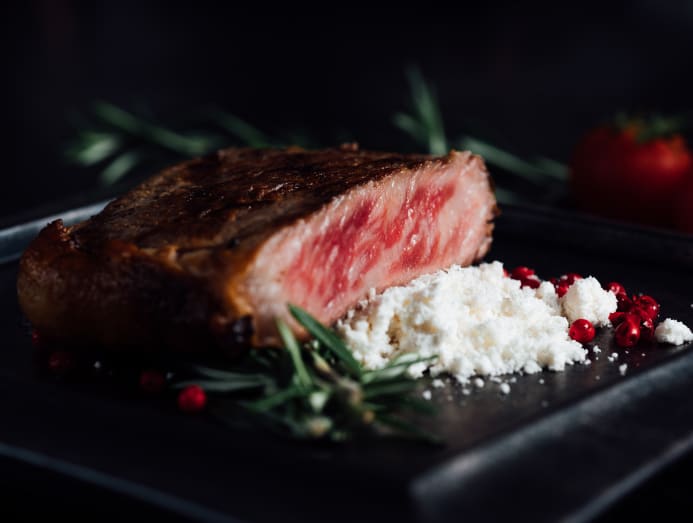
Another proven method of accentuating wagyu's already savoury flavour profile is ageing. At Yen Yakiniku, for instance, diners can choose to take an intentionally older (67 months) Hida Hime wagyu striploin (A4) that has been dry-aged in-house for 30 days. Or a 21 days dry-aged Nagasaki A5 wagyu striploin at Fatty Cow.
And while ageing is a mutual practice with a variety of beef, snowfall-aged full-blood wagyu from Uoshoku Meat in Niigata Prefecture – also available at Origin Grill – is produced using a distinctive, time-honoured technique chosen yukimuro. This requires the beef to exist aged in a snow-covered room at a constant range of temperature ranging between zero and five degrees Celsius for 30 days.
Yeo explained: "What results is beef that yields rich marbling and is extremely tender and moist. Every bit proteins are also broken downward by oxygen in the process, gratis amino acids are released, allowing the meat to develop a pronounced umami flavour, also equally a sweeter, silkier, and richer gustatory modality."
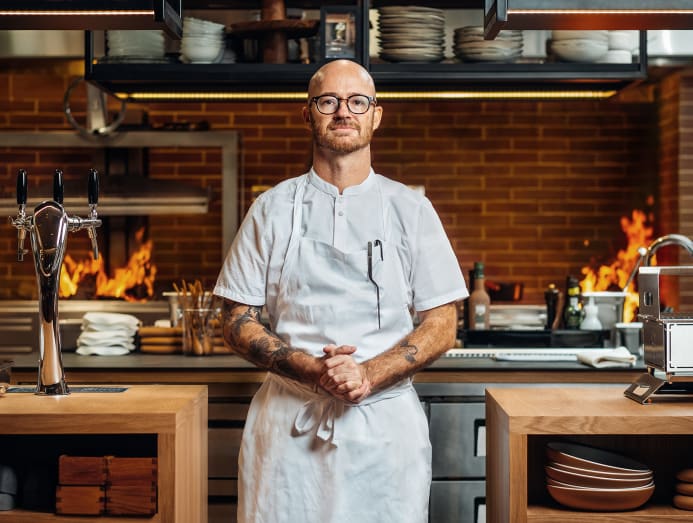
Ultimately, the choice wagyu is the one that suits your palate and dining philosophy. "The best for me is 1 from Saga," said chef Remy Lefebvre of Casa Restaurant, a contemporary woodfire-focused restaurant that celebrates Lefebvre's life journey on a plate. "In my by restaurant experience, I have worked exclusively with Murata-san, a producer that carries the best A5 Wagyu in southward Japan. At the time, he exported only one cow a month and it was for us."
More chiefly, equally a chef, he feels that it is his responsibility to use respectfully sourced, healthy produce with the all-time flavour. He added: "We spent around 12 months tasting and trying different meats on the market place to find i that we felt was the best. We institute Altair (from Tasmania, Australia) and have been working with them because we appreciate the fact that they supply free-range, cross-bred wagyu with an exceptional marbling (MBS7) that we at present exclusively acquit at Casa."
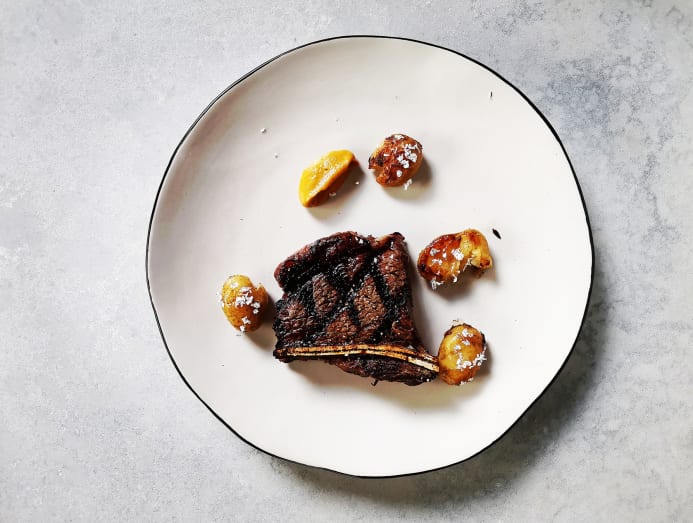
According its website, Altair wagyu is prized for successfully combining "the marbling and sumptuous texture of traditional wagyu with the clean minerality of grass-fed pasture raised cattle". They besides rear their cattle for at least xxx months – longer than typical beef programmes.
"The balance of texture betwixt fat and musculus, and the buttery flavour of their grass-fed wagyu is remarkable," shared Lefebvre, who prefers grass-fed beef every bit it is easier to assimilate, and that also ways diners can relish a adept quantity (220g on the os) during their meal without feeling overwhelmed.
His favourite cutting, though, is the tongue, which he will exist coincidentally serving this month (September), with devil sauce and Sterlet caviar, no less.

Recent Searches
Trending Topics
Source: https://cnalifestyle.channelnewsasia.com/experiences/why-wagyu-expensive-280546

Post a Comment for "Why is wagyu so expensive? Singapore chefs and restaurateurs explain"