Family Search, Shows Baby Needs to Be Sealed to Parents When They Were Already Sealed
Awaiting the Blessings of the Gospel
This affiliate describes how to make temple ordinances available to your ancestors.
Consider how it would be to accept the gospel but exist unable to receive baptism, the gift of the Holy Ghost, and the ordinances of the temple. Vincenzo di Francesca was someone who had that experience. In 1910 he found and read a copy of the Book of Mormon from which the cover and title page had been torn. Convinced of the book'due south truthfulness, he searched for many years for the religion to which the volume belonged. He finally plant the Church and was baptized in 1951. To the human being who baptized him, he said, "I have prayed daily for many years for this moment. … I know that you have led me through the door that volition eventually bring me back to my Heavenly Father, if I am true-blue" ("I Volition Not Burn the Book!" Ensign, January. 1988, 21).
You accept ancestors in the spirit world who, similar Vincenzo di Francesca, have accepted the gospel message and look to receive the ordinances of conservancy. As you consider what your ancestors must feel, you may begin to understand the urgency of temple and family history work. Yous may come up to know why President Joseph F. Smith described missionary work in the spirit globe equally proclaiming "liberty to the captives" (D&C 138:31).
Policies for Preparing Names for Temple Work
More often than not, y'all may perform temple ordinances for deceased persons ane year or more after the appointment of death without regard to the person's worthiness or cause of decease. If you have questions, please contact your bishop or co-operative president.
Before y'all perform ordinances for a deceased person built-in within the concluding 110 years, obtain permission from the closest living relative. Relatives may not want the ordinances performed or may want to perform the ordinances themselves. The closest living relatives are, in this order: a spouse, so children, so parents, and then siblings.
Determining Which Names to Submit
Yous are responsible to submit names of the post-obit individuals for temple piece of work (the individuals must have been deceased for at to the lowest degree one year):
-
Firsthand family unit members.
-
Directly-line ancestors (parents, grandparents, great-grandparents, and so on, and their families).
You lot may as well submit the names of the following individuals who take been deceased for at least ane year:
-
Biological, adoptive, and foster family unit lines continued to your family.
-
Collateral family lines (uncles, aunts, cousins, and their families).
-
Your own descendants.
-
Possible ancestors, meaning individuals who have a probable family relationship that cannot be verified because the records are inadequate, such equally those who have the same last name and resided in the aforementioned area as your known ancestors.
Do not submit the names of persons who are non related to you, including names of famous people or names gathered from unapproved extraction projects, such as victims of the Jewish Holocaust.
Determining What Ordinances to Perform
Use the following policies to help you know what ordinances need to be performed:
-
When ordinances are not needed. The FamilySearch Internet site will indicate when ordinances are not needed for a person, such equally in these situations:
-
Children who are born after their mother has been sealed to a husband are born in the covenant. They practise not demand to receive the ordinance of sealing to parents.
-
Temple ordinances are not performed for stillborn children. Withal, a child who lived even briefly after nascency should be sealed to his or her parents. In some countries, especially in Europe, children who died soon after nativity were ofttimes recorded as stillborn. Children listed as stillborn on records from these countries may exist sealed to their parents. The FamilySearch Internet site volition let you know if a sealing ordinance needs to be performed for a kid who was recorded as stillborn. You should record all births, indicating whatever stillborn children.
-
No baptism or endowment is performed for a child who died before the age of eight. Only sealings to parents are performed for such children. If the child was sealed to parents while he or she was living or if the kid was born in the covenant, no vicarious ordinances are performed.
-
-
Sealing couples with undocumented marriages. Yous may take a deceased couple sealed to each other if they lived together every bit husband and married woman, even if the marriage cannot be documented. Yous tin can use the FamilySearch Cyberspace site to prepare these names for temple ordinances without whatever other approval process.
-
Deceased women married more than once. You lot may have a deceased woman sealed to all men to whom she was legally married. However, if she was sealed to a husband during her life, all her husbands must be deceased before she tin can be sealed to a married man to whom she was non sealed during life.
-
Deceased persons who had mental disabilities. Temple ordinances for deceased persons who had mental disabilities are performed the same as for other deceased persons.
-
Persons who are presumed dead. Yous may have temple ordinances performed for a person who is presumed dead after 10 years take passed since the time of the presumed death. This policy applies to (1) persons who are missing in activeness or lost at sea or who have been declared legally dead and (ii) persons who disappeared under circumstances where decease is credible but no trunk has been recovered. In all other cases of missing persons, temple ordinances may not exist performed until 110 years have passed from the time of the person'south birth.
-
Other policies. Please see your bishop for information almost the following:
-
Temple ordinances involving living people.
-
Temple ordinances to seal the living to the expressionless.
-
Any policies not covered higher up.
-
Submitting Names to the Temple
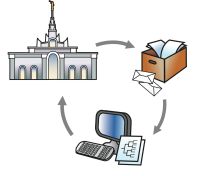
Later yous accept found all the required information virtually an ancestor and it is entered into the FamilySearch Net site (see chapter 4 of this guide), you are ready to set a Family unit Ordinance Request class to accept to the temple. This class will make it possible for temple ordinances to be performed for the person. Follow these steps to set up the form:
-
If yous accept a computer with Internet admission, go to the FamilySearch Internet site and select the temple ordinances that demand to be provided for your ancestor. Select only every bit many ordinances every bit can be done in a reasonable corporeality of time. Then print a Family Ordinance Request form. The FamilySearch Internet site allows you to request that someone other than yourself take the Family Ordinance Request to the temple and perform ordinances for your ancestor. (Refer to the Help Center at new.familysearch.org for detailed instructions on how to use the Cyberspace site.)
-
If yous take filled out paper forms, ask a family history consultant to assist you obtain a Family Ordinance Request for the temple ordinances that need to be provided for your ancestor. Yous volition need to provide your Helper Access Number. (This number is the terminal five digits of your Church membership record number. You tin get this number from your ward clerk.)
Give your family group records to the family history consultant, who will arrange to accept the data on your forms typed into the FamilySearch Internet site. Afterward the information has been entered into the computer, the consultant volition give you lot a Family Ordinance Asking, which you can take to the temple.
Y'all may do ordinance work only for persons of your own gender. Those who do baptisms and confirmations at the temple must be at least 12 years former, must be baptized and confirmed, and must take a current temple recommend. Males must agree the priesthood. Those who do other temple ordinances must be endowed and have a electric current temple recommend.
Performing Temple Ordinances
Scheduling a Visit to the Temple
At some temples you will need to schedule a time to do ordinances. At others, you can simply go whenever the temple is open. If you lot take any questions, contact the temple equally you program your visit. Your bishop or branch president can tell you how to contact the temple.
Temple ordinances should be done in this order:
-
Baptism and confirmation.
-
Priesthood ordination for males and initiatory ordinances.
-
Endowment.
-
Sealings. (The marriage sealing should be done after both the husband and the wife have received the endowment. Children may be sealed to parents after the parents have been sealed to each other.)
At the Temple
Take the Family Ordinance Asking class with y'all to the temple. There, a temple worker will print ordinance cards for you, and you can use the cards to practise ordinance piece of work.
Whenever possible, y'all should enter your family unit history data into the FamilySearch Internet site before attending the temple, either from dwelling house or from a family history centre. If you cannot do this, temple workers at some temples may exist able to assist you enter the data and impress ordinance cards if you lot bring the family group records you take prepared. Contact the temple before you go to see if this service is provided.
Later on Attending the Temple
Once you have completed temple ordinances for an individual, you lot tin verify that the work has been recorded. Just look up the person's proper name on the FamilySearch Net site.
-
If you have a computer with Cyberspace access, go to the FamilySearch Internet site and sign in to the system. Review the information virtually yourself and your ancestors, and verify that the ordinance work was recorded correctly.
-
If you lot practise not have access to the Net, ask a family history consultant to print a family unit group record from the FamilySearch Internet site showing the ordinances completed for your family members.
Blessings of Temple Work
Latter-day prophets have consistently emphasized the importance of performing temple work for our ancestors. President Thomas S. Monson taught:
"The work of seeking out our dead and ensuring that the ordinances of exaltation are performed in their behalf is a mandate from our Heavenly Father and his Beloved Son. They do not leave us to struggle solitary simply rather, in ways which are sometimes dramatic, prepare the way and reply our prayers" ("Happy Birthday," Ensign, Mar. 1995, 58).
President Gordon B. Hinckley said:
"In a spirit of love and induction, nosotros must extend ourselves in the work of redemption of the dead through service in the temples of the Lord. This service more than nearly approaches the divine work of the Son of God, who gave his life for others, than does any other work of which I know" (in Briefing Report, Apr. 1983, viii; or Ensign, May 1983, 8).
President Boyd Grand. Packer of the Quorum of the Twelve Apostles spoke of the blessings that come to those who engage in this piece of work:
"Family history work has the power to do something for the expressionless. It has an equal power to do something to the living. Family history work of Church members has a refining, spiritualizing, tempering influence on those who are engaged in it. …
"Family history work in ane sense would justify itself even if one were not successful in clearing names for temple piece of work. The process of searching, the means of going after those names, would be worth all the effort you could invest. The reason: Y'all cannot find names without knowing that they represent people. You brainstorm to find out things about people. When nosotros research our own lines we become interested in more than just names or the number of names going through the temple. Our interest turns our hearts to our fathers—nosotros seek to find them and to know them and to serve them. In doing so we store upwards treasures in sky" ("Your Family History: Getting Started," Ensign, Aug. 2003, 17).
Continuing Your Efforts
The Prophet Joseph Smith taught the eternal consequences of temple work. In 1842 he wrote a letter of the alphabet urging the Saints to practice baptisms for their deceased ancestors:
"Brethren, shall nosotros not become on in and so great a cause? Become forwards and not backward. Courage, brethren; and on, on to the victory! Let your hearts rejoice, and be exceedingly glad. … Permit the dead speak forth anthems of eternal praise to the King Immanuel, who hath ordained, earlier the globe was, that which would enable us to redeem them out of their prison; for the prisoners shall go free" (D&C 128:22).
This guide has helped you become familiar with temple and family history work. You have studied the doctrines that pertain to the redemption of the expressionless. You have learned how to gather and record family history data. You have learned how to provide the treasured blessings of the temple for your family unit.
Refer to this guide as often as needed. You can ask a family history consultant for assistance when y'all need it. Continue your efforts to find and redeem your ancestors. Go forward with the promise that through your efforts they "shall go free" (D&C 128:22).
- Previous
- Next
Source: https://www.churchofjesuschrist.org/manual/members-guide-to-temple-and-family-history-work/chapter-7-providing-temple-ordinances?lang=eng

Post a Comment for "Family Search, Shows Baby Needs to Be Sealed to Parents When They Were Already Sealed"